
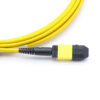
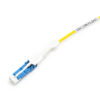
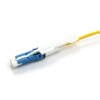
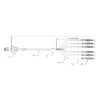
Optical’ s Specification:
| Spec items. | Single mode (APC 8-degree polished) | Multimode (PC Flat polish) |
| Insertion loss (MPO)
(IEC 61300-3-34) |
Standard loss:≤0.75dB(max), ≤0.35dB(Typical)
Super Low loss:≤0.35dB(max), ≤0.20dB(Typical) |
Standard loss:≤0.6dB(max), ≤0.35(Typical)
Super Low loss:≤0.35dB(max) , ≤0.20dB(Typical) |
| Insertion loss (CS)
(IEC 61300-3-6) |
≤0.3dB | ≤0.3dB |
| Return loss(MPO) | ≥60dB(8degree polishing) | ≥25dB |
| Return loss(CS) | APC≥60dB; UPC≥50dB | ≥35dB |
| Durability | <0.3dBtypical change, 200 matings | |
| Interchangeability | ≤0.2dB | |
| Tensile strength | >70N | |
| Operating Temperature | -40 to + 85°C | |
MPO End-Face 3D Interference Index
| Item (IEC-61300-3-30) | Minimum | Maximum | ||
| Radius of curvature (mm) | ROC-X(ABS) | 2000 | \ | |
| ROC-Y(ABS) | 50mm | \ | ||
| Angle | Angle-X | -0.2° | -0.2° | |
| Angle-Y | APC | 7.85° | 8.15° | |
| PC | -0.2° | -0.2° | ||
| Fiber height (nm) | 1000nm | 3500nm | ||
| Max.DH.All Fiber: | -300nm | 300nm | ||
| DH.Adj: | -300nm | 300nm | ||
| DH.Ave Fiber: | -300nm | 300nm | ||
| Core Dip: | SM | N/A | N/A | |
| MM | -200nm | 300nm | ||
CS End-face Quality (SM)
| Zone | Range (μm) | Scratches | Defects | Reference |
| A: Core | 0 to 25 | None | None | IEC 61300-3-35:2015 |
| B: Cladding | 25 to 115 | None | None | |
| C: Adhesive | 115 to 135 | None | None | |
| D: Contact | 135 to 250 | None | None | |
| E: Rest of ferrule | None | None | ||
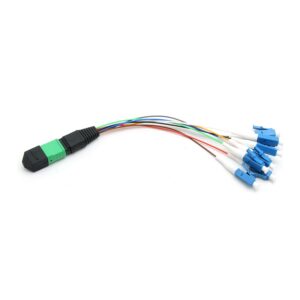
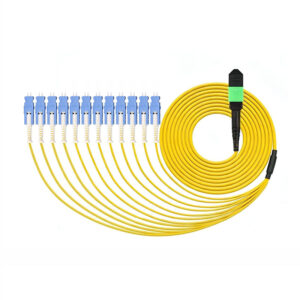
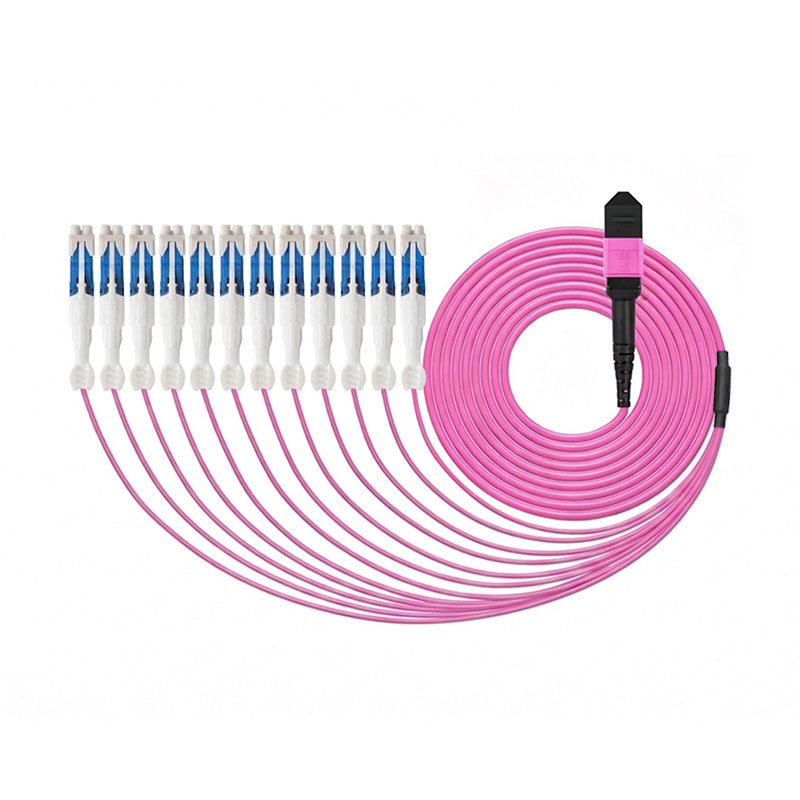
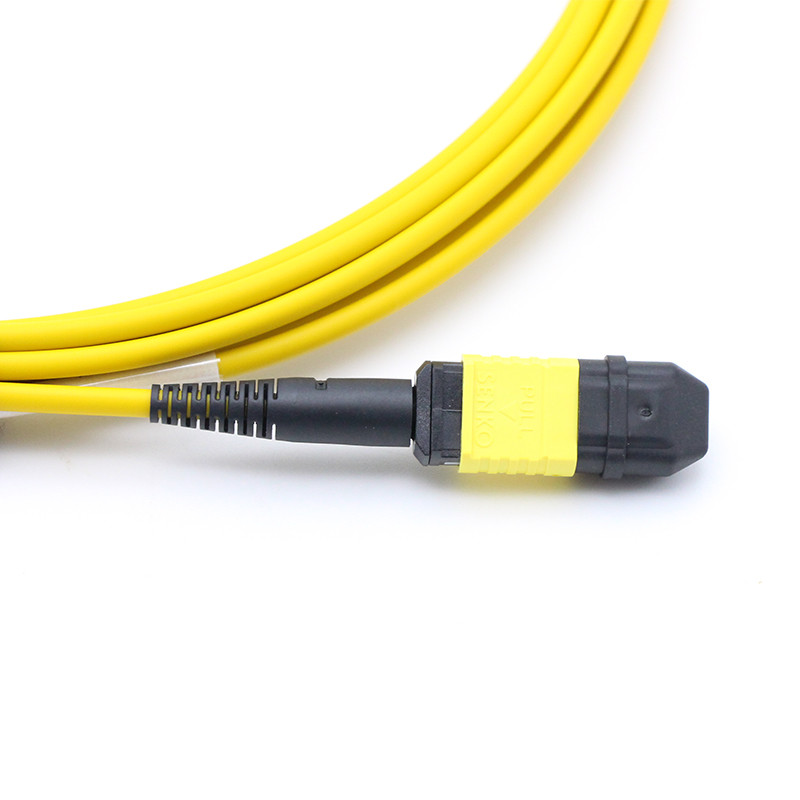
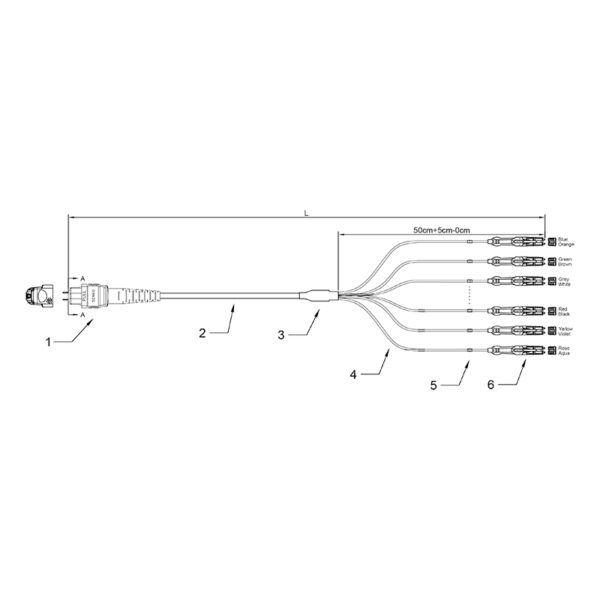
MPO Connector’s Details:
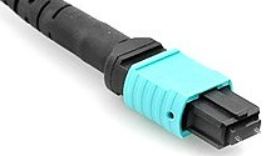
| Connector | Fiber Channel |
 |
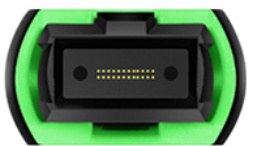 |
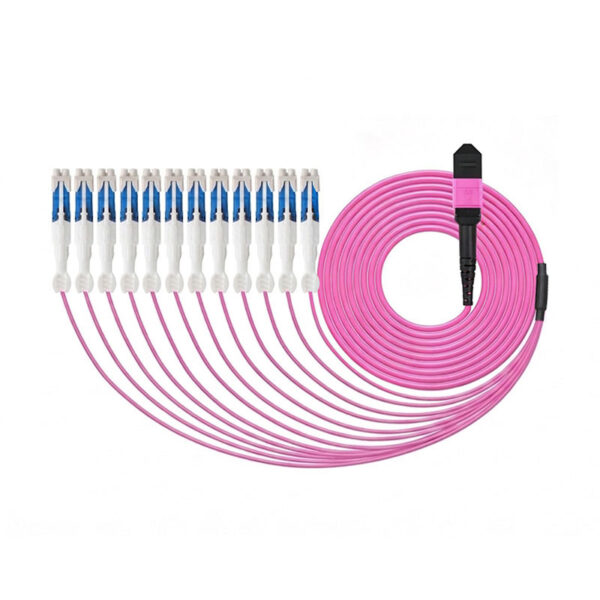
| MPO Female Connectors | 24 Fibers |
| Note: Female connector need to connect with male connector type. | |
| Connector | Reference | Housing Details |
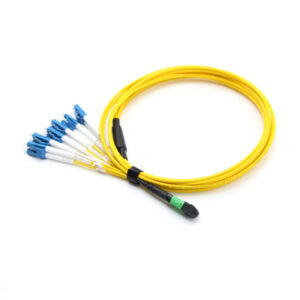
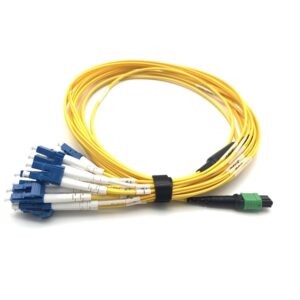
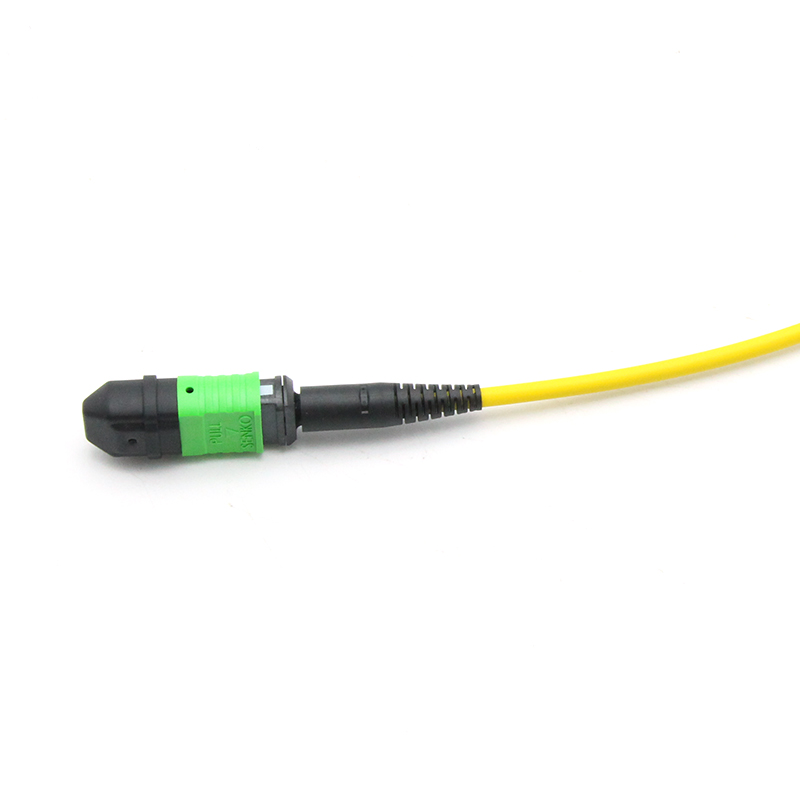
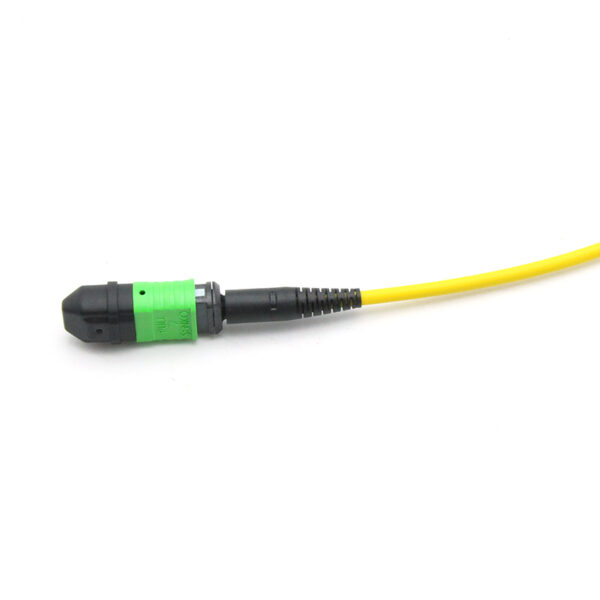
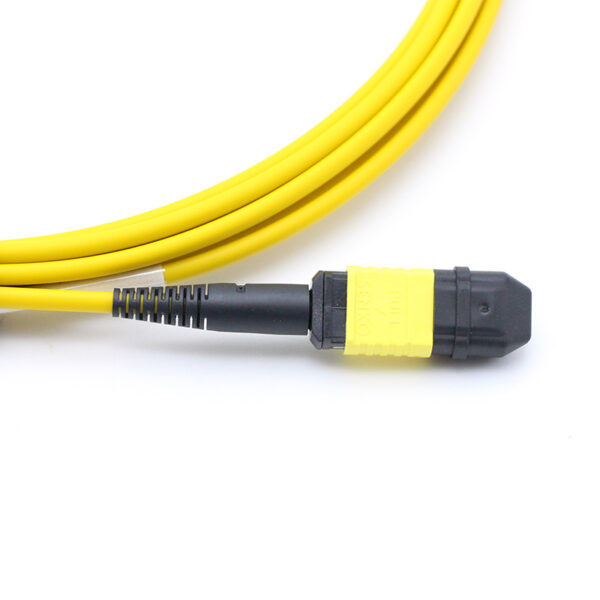
| MPO Single Mode | IEC 61754-7 | SM APC: Green connectors+black boot (Standard Loss MPO)
SM APC: Yellow connectors+black boot (Super low loss MPO) |
| MPO Multimode | IEC 61754-7 | OM1&OM2 PC: Beige connectors+black boot (Standard Loss MPO)
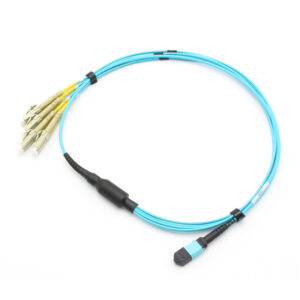
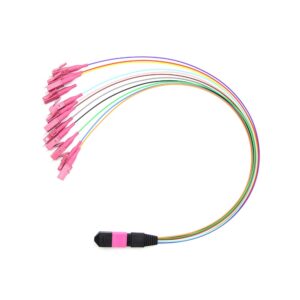
OM3&OM4 PC: Aqua connectors+black boot (Standard&Super low loss MPO) OM3&OM4 PC: Heather Violet connectors+black boot (Standard loss MPO) |
- Meets IEC Standard IEC-61754-7; IEC61755, Telcordia GR-1435-CORE, JIS C5982; TIA-604-5(FOCIS5) compliant
- Structured cabling per TIA-568-C
- 10G Fiber Channel Compliant
- 40G and 100G IEEE 802.3
CS Connector’s Details:
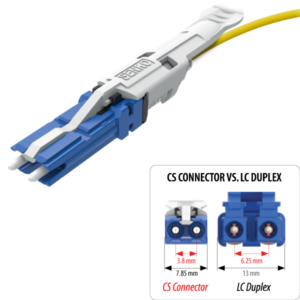
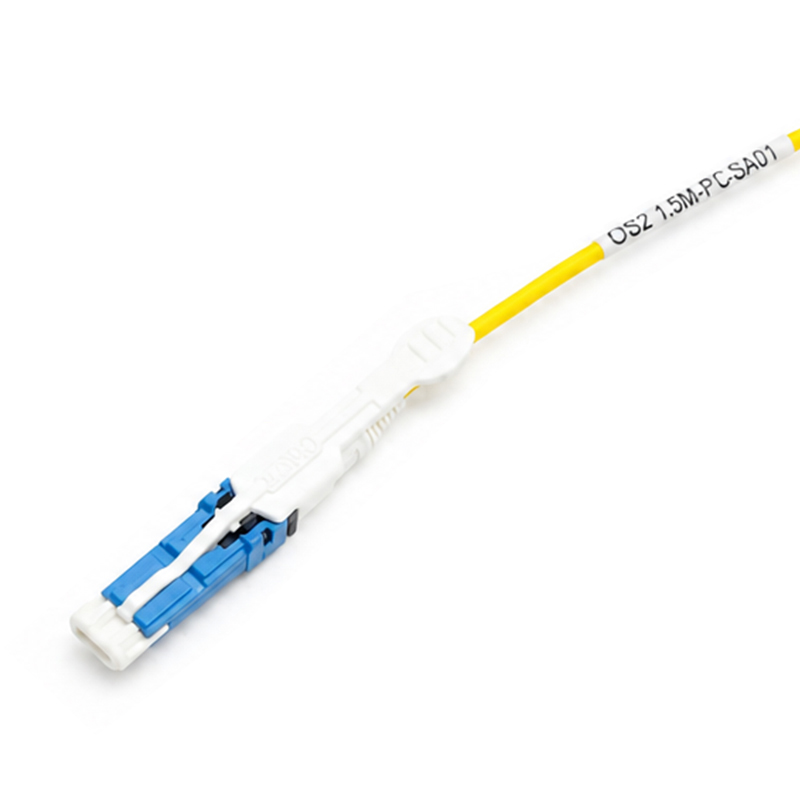
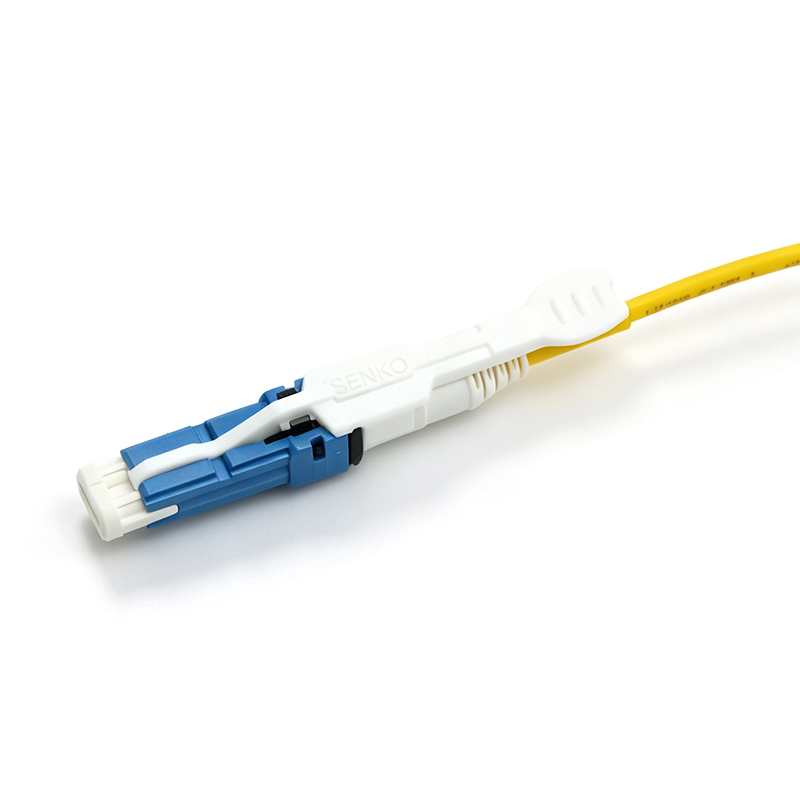
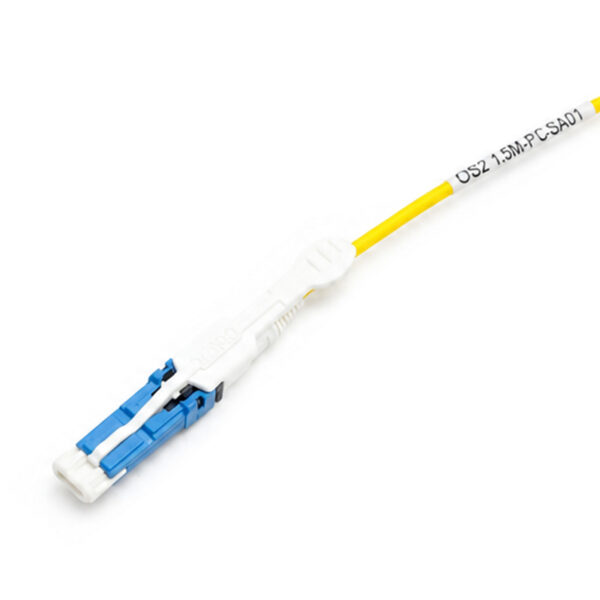
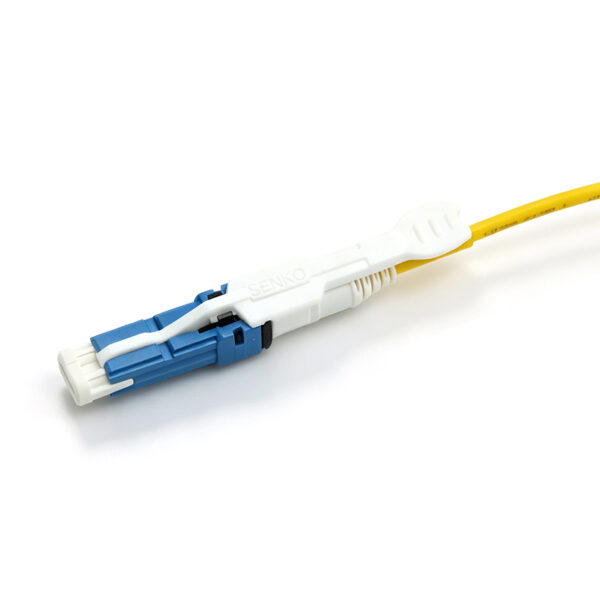
CS (Converged Standard) connector is an advanced Very Small Form Factor (VSFF) optical interface designed to overcome the physical limitations of traditional LC connectors in high-density environments. Featuring a compact footprint that is approximately 40% smaller than a standard LC duplex connector, the CS design effectively doubles the port density on front panels and patch panels.
Engineered for modern data centers, the CS connector utilizes a push-pull boot mechanism, which significantly improves usability and accessibility in tightly packed, high-density racks. A key innovation is its polarity reversal feature, allowing for quick and easy polarity switching without the need to re-terminate the fiber or twist the cables.
Delivering optical performance that meets or exceeds IEC and GR-326-CORE standards, the CS connector is the ideal physical layer solution for next-generation 400G and 800G Ethernet networks, AI/HPC clusters, and ultra-dense data center architectures where maximizing space and airflow is critical.
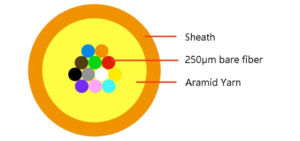
Cable Parameters-16F Microfiber cable
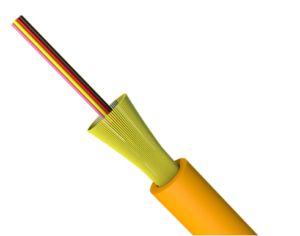
| Item | Contents | Unit | Data |
| Fiber type | / | / | OS2 9/125um |
| Fiber Count | / | piece | 24 |
| Cable diameter | / | mm | 3.0±0.2 |
| Strength member | Material | / | Aramid Yarn |
| Max. tensile load | / | / | Short term:150N; Long term:80N |
| Outer sheath | material | / | LSZH, Plenum(OFNP),Riser(OFNR) |
| Temperature range | -20℃ ~ +70℃ |
Flame retardant Performance
| Cable material | Standard |
| LSZH | CPR : B2ca, Cca, Dca, Eca,Fca |
| OFNP&OFNR | UL-94V0 |
Cable Jacket Material
| Item | OFNP Plenum | LSZH | OFNR Riser |
| Smoke emission | Extremely low | Very low | Heavy black smoke |
| Toxic halogen gas | None | Zero | High (chloride) |
| Fire resistance rank | Highest | Medium | Medium-low |
| Plenum air space use | Allowed | Not UL certified, restricted | Strictly prohibited |
| Vertical riser shaft | Supported | Supported | Optimized for riser shafts |
| Rigidity & hardness | Stiff, firm texture | Soft, flexible | Moderate flexibility |
| Cost | Highest | Mid-range | Lowest |
Length Tolerance
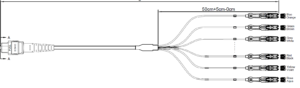
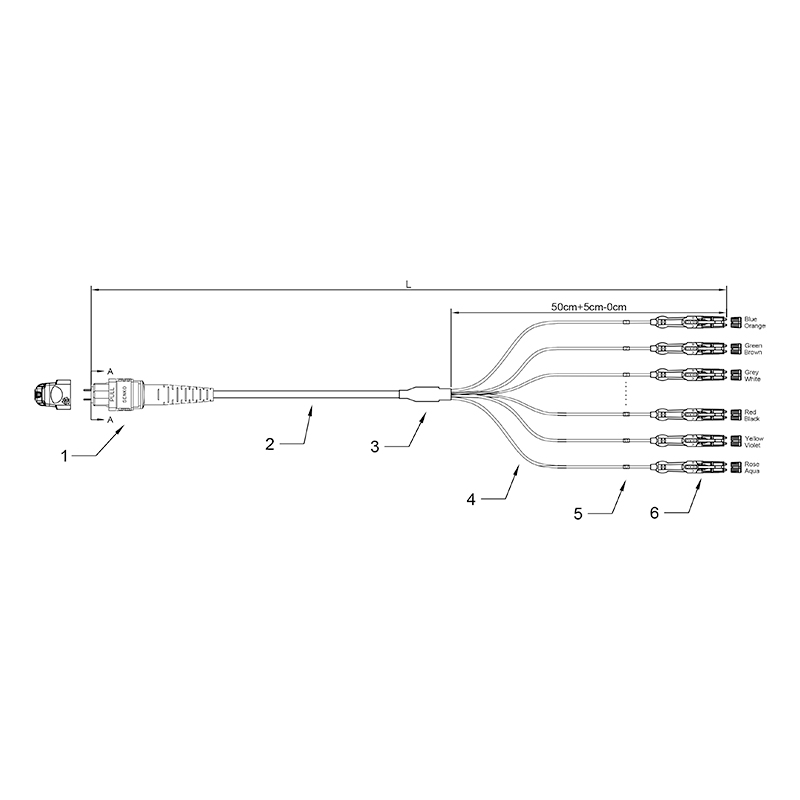
| Overall Length(L)(m) | length of tolerance(cm) |
| 0<L<1 | +5/-0 |
| 1<L<10 | +10/-0 |
| 10<L<40 | +15/-0 |
| 40<L | +0.5% x L/-0 |